
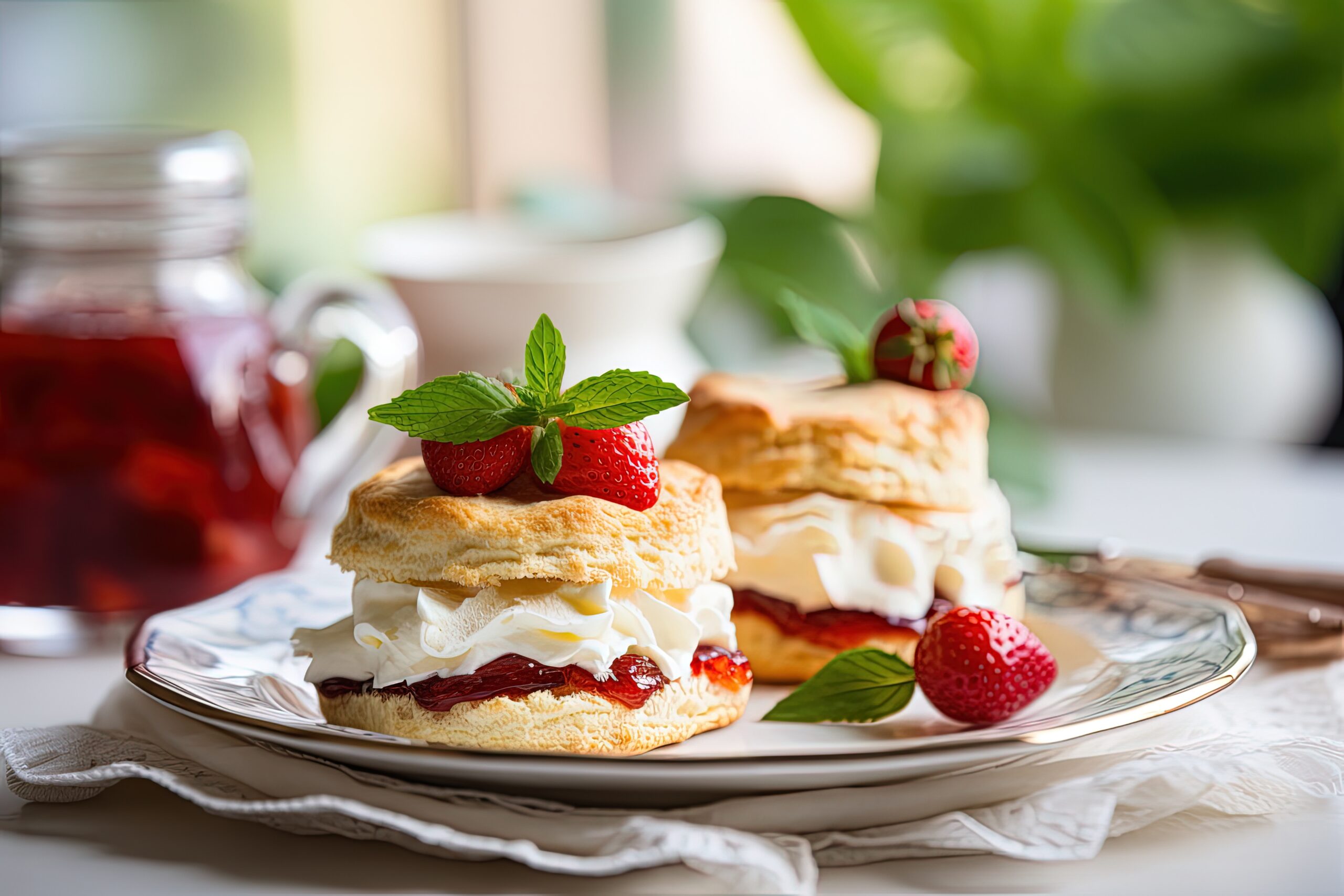

Few things feel as comforting or as quietly indulgent as a freshly baked scone paired with rich clotted cream. It’s simple. It’s elegant. And somehow, it turns an ordinary moment into something special.
But behind this beloved pairing is a story filled with history, tradition, and even a little friendly debate.
What Exactly Is a Scone?
Scones may seem like a simple baked good, but they’ve been enjoyed for centuries. Their origins trace back to the United Kingdom, with early versions believed to have come from Scotland.
Originally, scones were quite different from the light, fluffy versions we enjoy today. They were made with oats, cooked on a griddle, and cut into wedges, more rustic, but just as satisfying.
Over time, they evolved into the tender, buttery treats we now associate with afternoon tea.
Fun fact:
The word “scone” is still debated in pronunciation; some say “skone,” others say “skoan.” Both are widely accepted, depending on where you are.
The Star of the Show: Clotted Cream
Scones are the foundation, clotted cream is the luxury.
Clotted cream is a thick, silky spread made by slowly heating full-fat cream until a rich, golden crust forms on top. The result is a texture that sits somewhere between whipped cream and butter but with a flavor all its own.
It’s indulgent without being overly sweet, making it the perfect complement to a warm scone.
And yes, it’s very different from whipped cream. Once you try it, there’s no substitute.
Jam First or Cream First? The Great Debate
Now, here’s where things get interesting.
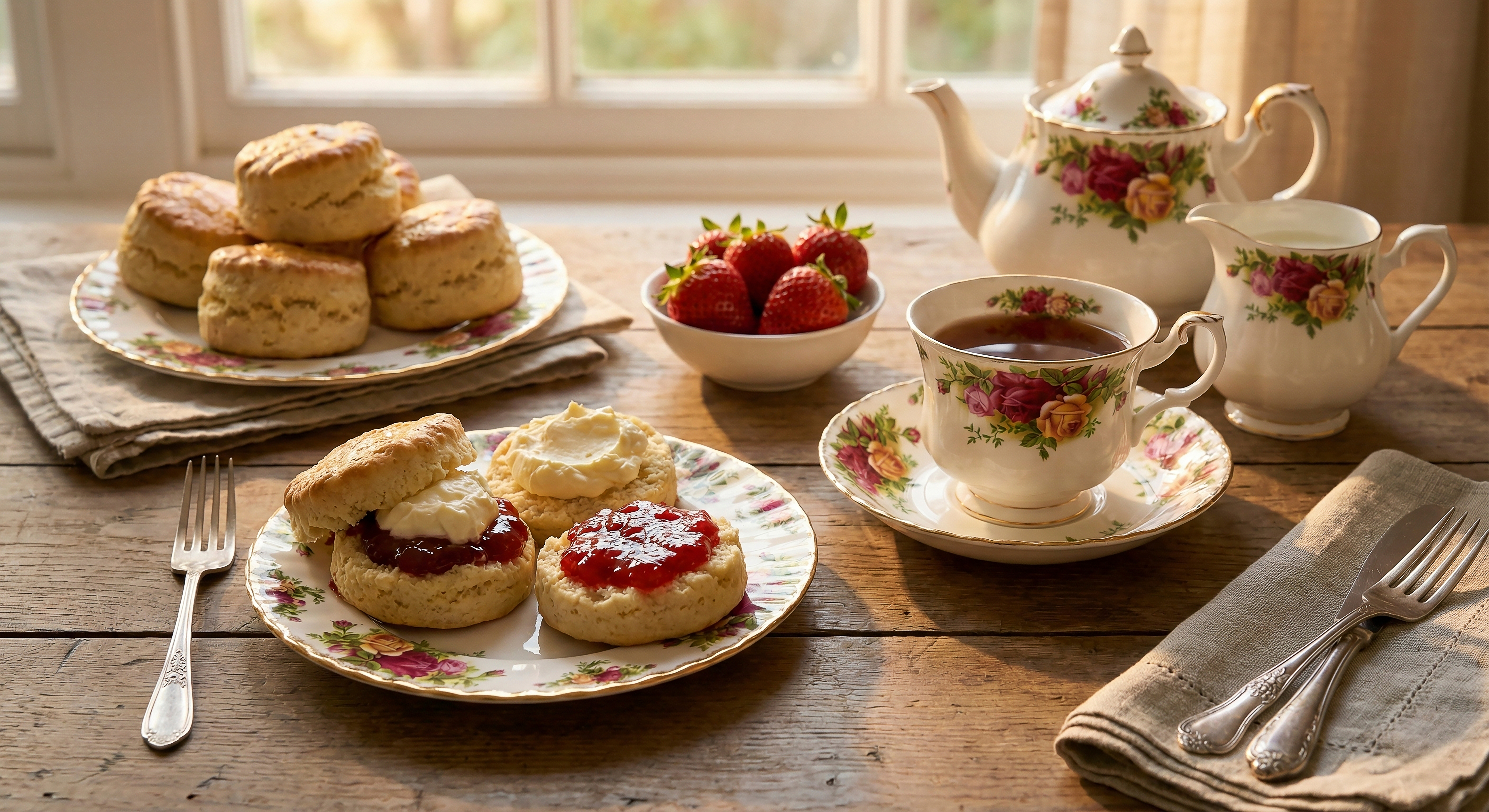
In England, there’s a long-standing (and very serious) debate about how to properly assemble a scone:
- Cornwall tradition: Jam first, then clotted cream on top
- Devon tradition: Clotted cream first, then jam
Each side is passionate and convinced they’re right.
The truth? There’s no wrong way. It simply comes down to preference… though trying both is highly recommended.
Why Scones Became a Tea Time Staple
Scones rose to popularity during the Victorian era, when afternoon tea became a social ritual. They were easy to prepare, perfectly portioned, and paired beautifully with tea.
But more importantly, they added something special to the experience.
They weren’t just food—they were part of the presentation. A tiered tray, delicate servings, and a sense that this moment was meant to be enjoyed, not rushed.
That tradition continues today.
More Than Just a Treat
Scones and clotted cream are more than just something to eat, they’re part of an experience.
They invite you to slow down. To savor each bite. To enjoy conversation, laughter, and the simple pleasure of being present.
Whether shared with friends or enjoyed quietly with a cup of tea, they turn a small moment into something memorable.
A Taste of Tradition at 1890 Tea House
At 1890 Tea House, this timeless pairing is brought to life in a way that feels both authentic and welcoming.
Freshly baked scones, served warm and perfectly balanced, paired with rich clotted cream and carefully selected accompaniments, every detail is designed to honor tradition while creating a memorable experience.
It’s not just about how they taste (though they are unforgettable).
It’s about how they make you feel.
Relaxed. Comfortable. A little indulgent—in the best possible way.
A Simple Pleasure, Perfected
In a world filled with complicated choices, there’s something refreshing about returning to the simple things.
A warm scone.
A spoonful of clotted cream.
A cup of tea.
Sometimes, that’s all it takes to create a moment worth savoring.